
Random Thoughts from an Unemployed Mind

A Perfect Day for an Island

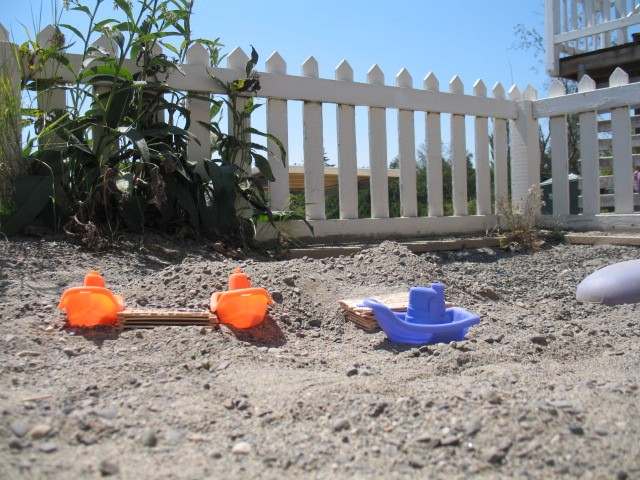
Late in the spring, one of my students set up this scene depicting his interpretation of Lummi Island. I appreciated it because I used to live there.  As I was going through the photos on my camera I found this perfect place in my past, a quiet day in June, so clear and unhurried, a day to build a dream island in the yard next to the white picket fence.

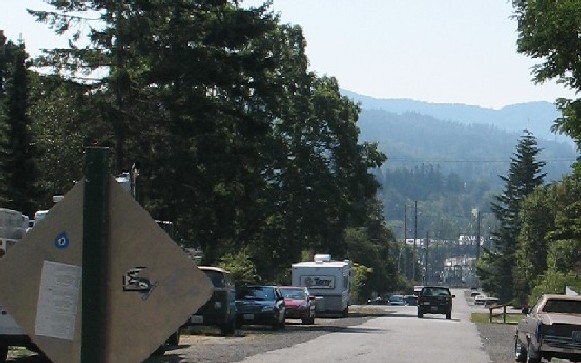
Grey Building in the Afternoon Rain

I also came upon a picture of this building. I have a passion for decay, especially weathered and dilapidated factories, warehouses and barns. They are huge sculptures of intricate shades and nuances with colors, angles and shadows that I cannot find in newer well cared for buildings. the interaction of nature on the artificial fascinates me. Weather, gravity, and time are the masters of this craft. The fact that someone still works here amazes me.

Layers

Yesterday I was listening to a lecture on Thomas Pynchon‘s The Crying of Lot 49 by a Yale professor. As she was talking about the layers that language adds to our experience of life, I could hear my son Jordan’s measured and assured voice in the next room. He was talking  into a phone that connected through waves to someone in a different place. I was distracted by the feeling that what he was saying to that person might be more important for me to hear than what the Yale professor was saying to her class a few years ago. My son is one of the people I truly trust and admire, and I find his interactions in the world fascinating because he is so unlike me.  I had a feeling even before the wordy ideas started to trickle in to my thoughts that I was missing something that I could never hear again, something that might help me get a clearer picture of who he is. This seemed so much more important in that instant than what the Yale professor thought Thomas Pynchon was trying to say. Then the wordy realities crashed in and I was flooded with ideas about how we are constantly bombarded by language in so many layers, the sound of a voice in another room layered over the words of a recorded lecture about a book written over 30 years ago. How do I as a person figure out what layer to focus on? Or is it important to experience all the layers and sort them out as they come? I decided to enjoy the sound of my sons voice while I continued to listen to the words of the professor talk about the words of the author who was writing about how people live with language. I let the layers wash over me. I have not yet sorted it all out, but as you can see I am making a start at adding my layer to the mix.


Poem in “g”

Ragged rage on the page

The angle of an angel

ranges from eight to danger

BANG!

Caught in a draught

the engineer’s binge

brought the ginger angst

and a plague of cringing

ringing: Ding Dong!

all night a singeing song

Language to light and laugh

through tough straights

though meager wags the wagers

on the ageless eagles bough.

Posted in Art in Nature, capturing light, conversations, discovery and recovery, Family, mindworks, My Art, my life, paying attention, philosophy, poetry, spring, Teaching and Learning, Telling Stories, thinking in words, time travel, Word play | Tagged , , , , , , , , , | 2 Comments

Another One Done/ My Latest Former Journal

Front

I started this one in October of last year and finished it as we moved out of our house on the hill. I had to do some repair work, but left much of it funky because that’s the way I like my journals. They are a part of my daily drag around existence and so sustain a some damage along the way. I decorate them as I go with bits and pieces that I find that fit. They lose bits here and gain them there, this is the final product, random but organized.

Back

Posted in doodles, file folders and nut shells, My Art | Tagged | 1 Comment

One More Sentence, Please, Dear Reader/Writer?

The reader! You, dogged, uninsultable, print-oriented bastard, it’s you I’m addressing, who else, from inside this monstrous fiction. You’ve read me this far, then? Even this far? For what discereditable motive? How is it you don’t go to a movie, watch TV, stare at a wall, play tennis with a friend, make amorous advances to the person who comes to your mind when I speak of amorous advances? Can nothing surfeit, saturate you, turn you off? Where’s your shame?

Having let go this barrage of rhetorical or at least unanswered questions and observing himself nevertheless in midst of yet another sentence he concluded and caused the “hero” of his story to conclude that one or more of three things must be true: 1) his author was his sole and indefatigable reader; 2) he was in a sense his own author, telling his story to himself, in which case in which case; and/or 3) his reader was not only a tireless and shameless but sadistic, masochistic if he was himself.

John Barth, Lost in the Funhouse/ Life-Story

I often feel like a character-author of some plodding fictional tale, but reading John Barth’s Lost in the Funhouse makes me think I am not intellectually up to the task of being the author. So I must content myself to being a character, probably some bit part that moves a minor piece of the plot. Hopefully it is a piece that brings about some enlightenment, but most likely just some lightly humorous sidebar.

I have been wading through this dense little book until I got to the above passage and it made me think about what in my novel my character would have affected to any great degree. I came up with a few:

1)      Through my marriage, I have affected the overall arch of my wife’s character, both in positive and negative ways. (Mostly positive, I hope)

2)      I have helped conceive and raise 3 fairly stable, and as far as I know decent, thoughtful human beings.

3)      Through teaching I have influenced parents to adopt more thoughtful parenting strategies and plan their lives taking into account the needs of their children. Now whether this leads to actual improvements, I can’t be sure, but I know that I have influenced parents to make changes.

4)      There have been many times when my inaction or passive denial of facts has lead to misunderstandings between myself and others (friends, families and others). And, though I don’t think I could be considered the villain of any piece (But then what well developed villain would actually consider himself so) I could be a piece of the machinery that undoes the protagonist of someone else’s story. There may be people out there who don’t like me and think I am a thoughtless wretch.

So what does all this mean to me at this moment. I am not sure. As a writer it makes me think of what the hell do you write after reading this. As a character, I think about ways I would write my story so it is more like one I would like to be in. Maybe I will write a happy ending, but we all know where this story is going. It is what you do before you get to the end that counts, or doesn’t depending on who is writing or reading. Just give me one more sentence, but not this one.

Posted in can't really complain but, funny stuff, lists, make your own world, Other peoples words, paying attention, philosophy, playing games, Questions and riddles, Teaching and Learning, the end is the beginning, thinking in words, Wacky World, whereever you go there you are | Tagged , , , , | 1 Comment

A Little Cervantes and Some Short, Fuzzy Answers

This morning I was feeling  sick and tired of filling out endless online applications that seemed like written job interviews. When I came across this quote in Lua’s very literary Blog. It made me feel like by just trying your best to be honest and ethical, you could be satisfied even when things are hard. Things are hard, but I feel OK, because in the end I feel I have done my best to do the right things in my own special way, which is usually a flawed, blindly groping effort. But, hey! I do my best. Thank you, Cervantes and Lua for giving me a more positive perspective.

“I was ever charitable and good to the poor, and scorn to take the bread out of another man’s mouth. On the other side, by our Lady, they shall play me no foul play. I am an old cur at a crust, and can sleep dog-sleep when I list. I can look sharp as well as another, and let me alone to keep the cobwebs out of my eyes. I know where the shoe wrings me. I will know who and who is together. Honesty is the best policy, I will stick to that. The good shall have my hand and heart, but the bad neither foot nor fellowship. And in my mind, the main point of governing, is to make a good beginning.”

Cervantes


Here are some of the answers that I came up with in 1200 characters or less:

The classroom at my last position was very small and crowded. I worked with the children and used my Reggio experience to redesign the space. I added several large mirrors and put space into general use that had been used as teacher space. The children and I came up with strategies for table use and guidelines on how to use walkways so that we could move around safely. I included the children in most of the process, and they were quite successful in using the classroom or negotiating with each other when there were conflicts.

Last year I had student with many challenging behaviors. He was impulsive and often physically abusive toward others in order to control their behavior. Whenever he was present I would position myself in physical proximity and provide both verbal and gentle physical reminders of positive ways to resolve issues. I gave him a number of strategies like clapping his hands and growling when he felt frustrated. I debriefed each day with his mother who was also concerned with his behaviors. By the end of the year, he had made several friends, and he was able to play across the room with minimal supervision.

I help people work in the classroom by providing clear guidelines and expectations and specific feedback. They should know what they are expected to do and have input into the planning if possible. I, also, provide assistance with challenging situations and model appropriate language and actions. I have periodic meetings with volunteers both give feedback and listen to their ideas and concerns.

I believe that each classroom must develop curriculum that fits with the needs of the group of children involved.
Documentation can be in the form of anecdotal individual and group observations, work samples, and conversations with other staff and parents. There should be a way to gather observations on each child into a report or portfolio that shows a child’s progress in the different aspects of their development. Parents should be involved in the process as much as possible.

Maximizing positive staff interactions with children on the child’s level.
Flexibility within consistency: Allowing children to follow their own schedule as much as possible while maintaining a daily routine.
Individualization: You need to take into account the individual temperaments, abilities, cultural backgrounds, and learning styles of each child.

The children as individuals: I have to get to know each child, their interests, temperament, abilities and cultural background.This is always numbers 1-4 on my list.
Developmental level: What are the appropriate expectations of the age group you are serving.
Cultural aspects of the community: What can we learn from our diversity as group.
Environment: what space do we have available and how is it best utilized.
Community Opportunities: What can we learn about the neighborhood and community surrounding the classroom.
The skills and interests of staff and parents involved.
Fun and fascination: Activities need to be engaging and provide joy for most of the children.
Variety: A good program provides a range of activities (indoor/outdoor, calm/active, messy/contained, individual/group etc.) to provide for different learning styles and emotional needs.
Hands on: Children need to be actively involved in learning in a very physical way.
Flexibility: Any curriculum I develop has be flexible enough to take advantage of unplanned for learning opportunities that arise.

The most important part of guidance in this age group is developing a good working relationship with each child. I talk with children and their parents and caregivers, observe children closely in the classroom, and work daily on building trust with each child.
The environment is also very important in guiding a child’s behavior. Each classroom needs to reflect to needs and abilities of the children who use it. Often I will adjust the environment in order to help children work well.
I use creative problem solving in collaboration with children, redirection, self-awareness and emotion coaching, listening and feedback, and group think approaches.
If a child is having consistent difficulties in the classroom, I like to involve the parents as collaborators working toward positive solutions to the problem. This usually gives the parents some ideas on how to deal with issues more positively at home and gives me insight into some of the nuances in the child’s thinking.
I do a lot of commentary on positive approaches I see children using to deal with difficult situations that come up. I make my statements as specific as possible so that the children can repeat successful strategies.

As a Head Start teacher, I worked closely with parents in all aspects of their lives, developing goals for each parent as individuals, for their families and individualized learning goals for their children during periodic home visits and conferences. I have worked with families of a wide variety of cultural backgrounds and who use many languages. I have a lot of experience building classroom communities with diverse language and cultures.

Can you guess what the questions where?

I am so sick of typing vague little answers in tiny boxes!

Posted in All part of the process, can't really complain but, Other peoples words, paying attention, philosophy, Questions and riddles, Teaching and Learning, thinking in words, working world | Tagged , , , | 1 Comment

Looking Beyond McCare World

There is a lot of interest in me as a teacher all of a sudden, but I am skeptical whether any of the interested parties are willing to support me financially. That is the way it is in the early childhood field if you are a competent teacher. Parents love you and want to leave their children with you, administrators respect you and want you to work for them, but nobody is able to give you a living wage. There is always  overhead and support staff, and no help outside what parents are able to afford, which for most parents is not enough to sustain the system. In most other first and some second world countries the government actually makes some financial commitment to childcare and early learning. They get that it is important to give children a solid foundation in life. In our country children are seen as the sole property and responsibility of their parents, and none of the rest of the countries business even though the cost of early intervention, quality care, and support for working parents is shown to be a fraction of the costs of a fragmented system of underfunded day cares that stress  employees, children, and parents.

The McCare system of corporate for-profit warehousing of young children is a travesty and indictment of our countries lack of planning for the future. We as a country are handing our future over to people who will try to make a dollar anyway they can.

Not that the public education system is helping the argument for government support of early childhood with its bloated bureaucrat heavy, top down approach to what amounts to school age daycare. There has got to be a way for parents to get together and support each other by supporting centers that hire good teachers and support staff at fair wages without building a juggernaut system that becomes an all consuming monster whose only purpose is to sustain itself. We need a system that provides quality care with well trained and well supported staff who understand how children learn and thrive with active parental input and involvement. In the long run we get what we plan and pay for, which at the moment is mostly an overburdened system of isolated and underfunded day cares some of which are actually striving for quality.

Posted in can't really complain but, change, paying attention, Teaching and Learning, thinking in words, working world | Tagged , , | Leave a comment